WhatsApp Is Encrypted, But It Still Collects Metadata
Many people believe WhatsApp WhatsApp is completely private because it uses end-to-end encryption.
That is partly true.
WhatsApp uses the same Signal Protocol for encrypting messages, so the content of your messages is protected.
However, privacy is about more than message content.
WhatsApp still collects metadata such as:
- Who you message
- When you message
- Device information
- Usage patterns
- Contacts
- Approximate location
This metadata can reveal a lot about your behavior, even if the actual messages remain encrypted.
Security experts have repeatedly pointed out that metadata can be used to build user behavior profiles, making it highly valuable in data-driven ecosystems.
So while WhatsApp protects your conversations, it still gathers information about how you use the platform.
That is the real issue in the Signal vs WhatsApp privacy debate.
Telegram Is Popular, But Its Default Privacy Is Weaker
Telegram Telegram is often seen as a secure app, but many users overlook one important detail:
Telegram chats are not end-to-end encrypted by default.
Regular Telegram chats are stored in the cloud and encrypted between the user and Telegram’s servers, not directly between users.
That means Telegram technically has access to cloud-stored data.
End-to-end encryption is only available in:
- Secret Chats
- One-to-one conversations
- Device-specific sessions
This means Telegram provides some privacy tools, but its default security model is weaker than Signal’s.
If your top priority is privacy, Signal remains the stronger option.
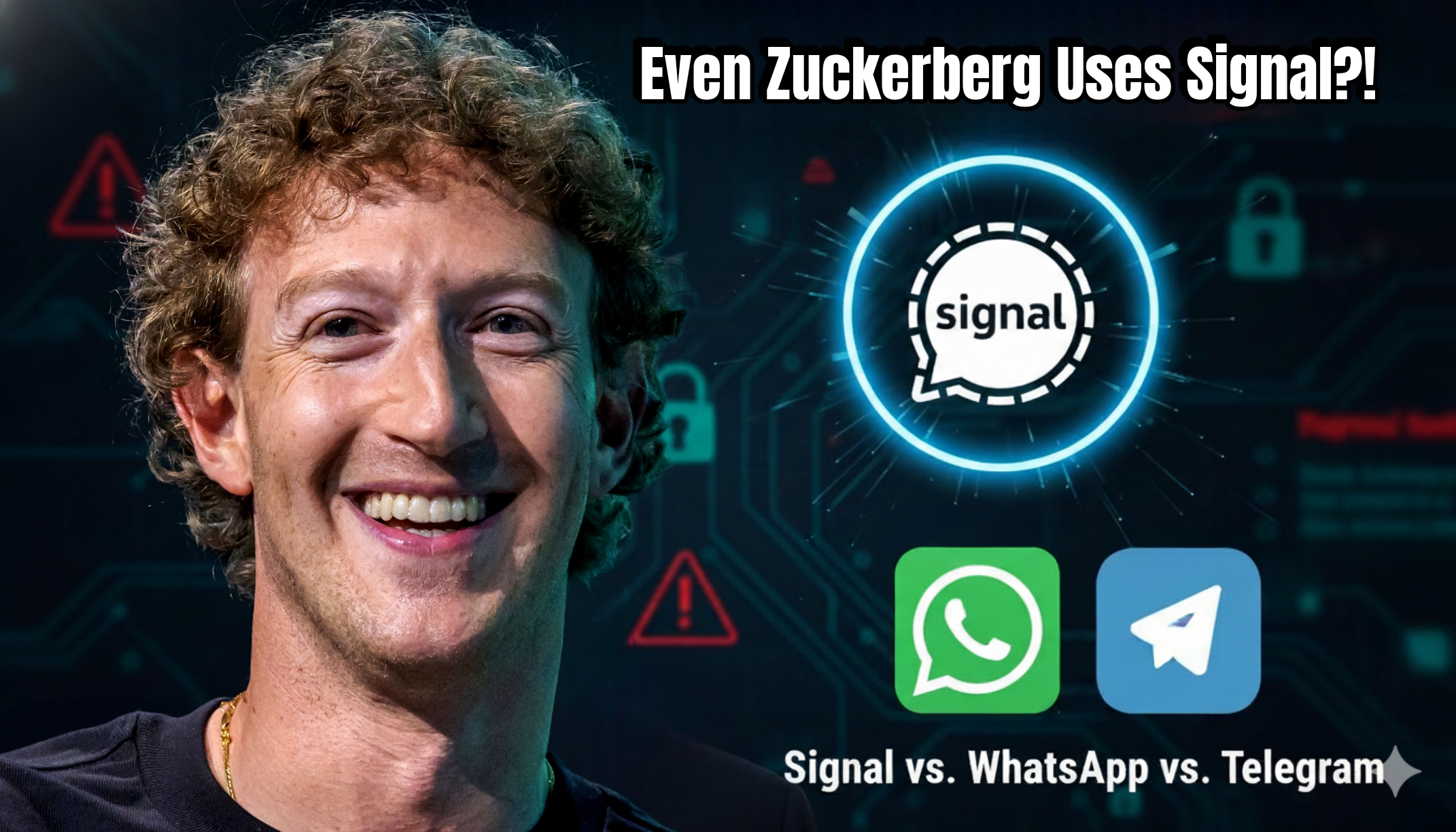
Signal vs WhatsApp vs Telegram: Which One Protects Your Privacy Best?
Let’s compare the three platforms:
Signal
✔ Open source
✔ End-to-end encrypted by default
✔ Minimal metadata collection
✔ Privacy-focused architecture
✔ End-to-end encrypted by default
✘ Collects significant metadata
✘ Owned by Meta
Telegram
✔ Rich features and cloud sync
✘ No default end-to-end encryption
✘ Cloud-based message storage
For users who care deeply about privacy, the conclusion is simple:
Signal offers the strongest privacy protections among the three.
Why Would Mark Zuckerberg Use Signal?
This is where things get interesting.
When the person behind one of the world’s biggest messaging platforms chooses another app for private communication, it raises an important point.
It suggests that privacy-focused platforms may offer stronger trust for sensitive communication than platforms built around large-scale data ecosystems.
This does not mean WhatsApp is unsafe.
It means that Signal was designed to collect less data and protect more privacy, making it attractive to users who want greater control over their personal information.
Final Thoughts
Your personal data is one of the most valuable assets in the digital age.
Every messaging app makes decisions about:
- How much data to collect
- How long to store it
- How securely to protect it
If privacy matters to you, those decisions matter too.
While WhatsApp WhatsApp offers convenience and Telegram Telegram offers flexibility, Signal Signal stands out as the best option for users who want real privacy, minimal tracking, and secure messaging.
And if even Mark Zuckerberg trusts Signal for private communication, that says a lot.
Which messaging app do you trust most: Signal, WhatsApp, or Telegram?
Share your thoughts in the comments and join the conversation about digital privacy and secure communication.
Keywords: Signal vs WhatsApp privacy, secure messaging apps, best private messaging app, Signal app privacy, WhatsApp metadata, Telegram privacy, encrypted messaging apps
Comments 0
Sign in with Google to leave a comment.